Tesla Builds Internal Maps to Fix FSD Driving Gaps
The company is developing a proprietary mapping layer to resolve persistent issues with speed limits and routing in its Full Self-Driving software.
By Mariana Delgado ·
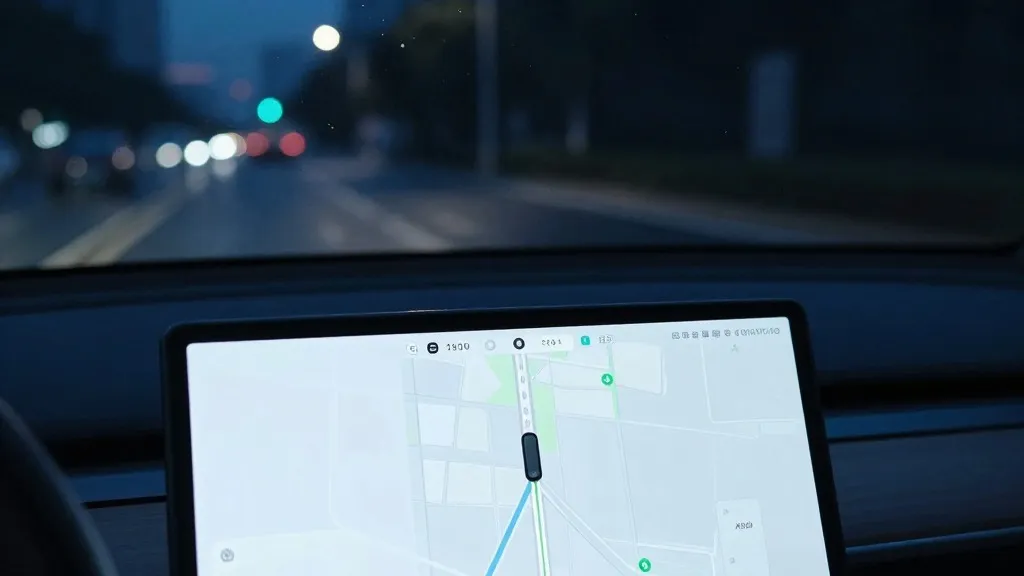
Tesla has long prided itself on a vision-only approach to autonomous driving, but the company is now building its own maps to address specific software shortcomings. The news emerged during the Q3 2026 earnings call, where leadership acknowledged the need for a more robust navigation infrastructure.
The company’s VP of AI, Ashok Elluswamy, stated that Tesla should stop relying on external map providers. He confirmed that a new AI-based architecture is being developed using data collected from the existing fleet. This system will learn from collective driving patterns and individual preferences.
Elluswamy indicated that the new mapping technology will initially handle the start and end of trips with the upcoming FSD v15 release. Over the coming months, it is expected to take over broader navigation, parking, and destination management tasks. This shift aims to solve common user complaints regarding route selection and final approach accuracy.
This development marks a significant departure from previous messaging. In 2019, CEO Elon Musk dismissed high-precision maps as a "really bad idea" that made systems brittle. He argued that cameras and AI alone were sufficient for any environment. That stance has now evolved into a strategy that relies on fleet-collected data to fill in gaps.
Current data suggests the vision system still struggles with basic environmental cues. A Belgian road safety group recently found that FSD vehicles exceeded speed limits in 55% of 30 km/h zones tested in Brussels. The average speed was 44 km/h, often because the vehicle displayed a 50 km/h limit. In the United States, the NHTSA is weighing an investigation into robotaxis speeding through school zones.
The new approach mirrors the operational model used by competitors like Waymo. Both companies use their fleets to map roads and update data continuously. While Tesla does not use lidar, the reliance on geofenced service areas and fleet-built maps brings the two strategies closer together. This move suggests that a pure vision-only solution may not yet be capable of handling all driving scenarios reliably.
Looking ahead, this internal map layer could provide a competitive advantage by leveraging Tesla’s massive vehicle count. However, it also admits that the current system requires supplemental data to function safely. As unsupervised FSD approaches consumer availability in Q2 2027, this infrastructure will be critical for reducing errors in complex urban environments.
Source: Electrek