Starlink's Reliability Crisis Forces Ukraine to Reassess Strategic Dependency
Political volatility surrounding Elon Musk’s satellite network is prompting urgent financial and logistical planning for European allies and Kyiv to secure alternative communications infrastructure.
By Brianna Jackson ·
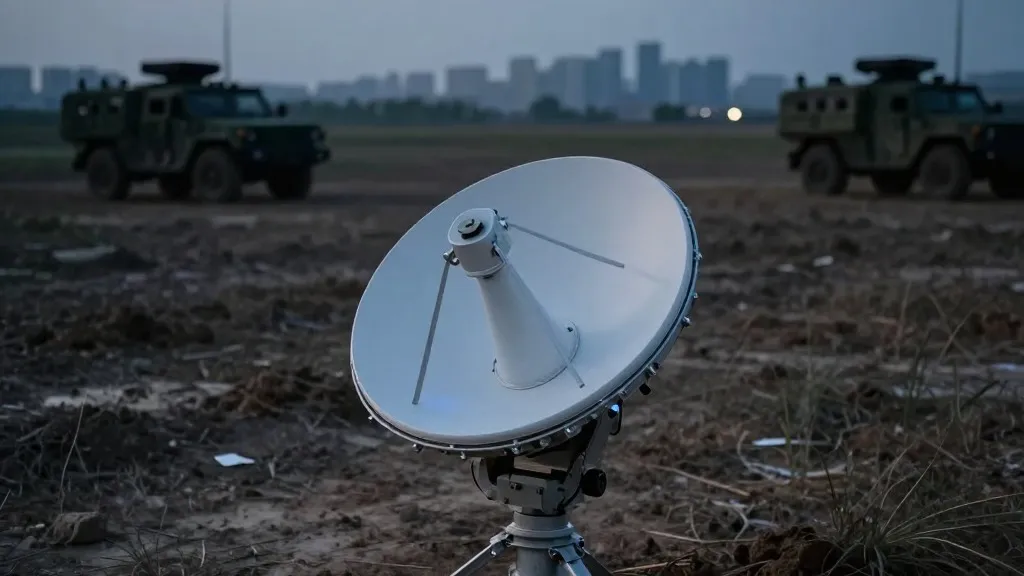
The strategic value of Elon Musk’s Starlink satellite constellation is currently under intense scrutiny as Ukraine confronts a critical operational gap. For years, the service has been the backbone of the nation’s digital connectivity, supporting both civilian life and military defense against Russian invasion. However, recent service interruptions, coupled with the increasing influence of Musk’s political views on business operations, have introduced a layer of unpredictability that defense planners and investors are now treating as a significant market risk.
The core tension lies in the transition from Starlink being viewed as an indispensable utility to a potentially politicized asset. As the world’s largest communications satellite network, Starlink has traditionally offered high-speed internet and data streams through compact terminals. This infrastructure allowed Ukraine to maintain vital communications and, crucially, to remotely control drones for air defense and offensive strikes. The recent surprise disruptions have forced a re-evaluation of how much strategic weight should be placed on a single private vendor.
From a market perspective, Starlink has historically dominated the sector due to its superior combination of cost, availability, and ease of use. An anonymous head of hardware R&D at the Ukrainian defense company BlueBird Tech noted that the service currently offers some of the best satellite coverage available, with virtually no competitors matching that specific value proposition. In practical terms, the primary limitation has been physical rather than financial: the need to position the antenna correctly to receive satellite signals.
Despite this technological edge, the financial models underpinning Ukraine’s defense strategy are shifting. The US government, along with European nations such as Poland and Germany, has funded the procurement of tens of thousands of commercial Starlink terminals for Ukraine. These allies have also covered the ongoing subscription fees, effectively treating the service as a subsidized critical infrastructure project. Additionally, the US has provided the Ukrainian military access to Starshield, a military-grade version of the network, which has allowed defense firms to integrate and test their own technologies within a more secure framework.
The reliance on these commercial and semi-military contracts has created a complex dependency structure. While the initial capital expenditure for terminals was substantial, the recurring subscription costs have become a significant line item in national defense budgets. The recent service disruptions have highlighted the fragility of this arrangement, raising questions about the long-term pricing power of SpaceX and the potential for further service adjustments driven by executive decisions rather than pure market demand.
For European markets, the situation presents an open question regarding the future of satellite internet investments. If the primary supplier begins to align its business decisions more closely with specific political inclinations, the cost of entry for other nations may rise, or the terms of service may become less favorable. This could accelerate the development of competing satellite constellations or ground-based alternatives, potentially altering the competitive landscape for communications technology across the continent.
The immediate challenge for Ukraine and its backers is to balance the continued use of Starlink with the development of backup systems. The BlueBird Tech representative’s comments suggest that while no current competitor matches Starlink’s efficiency, the market is not static. The urgency to secure alternative pathways reflects a broader business trend where critical infrastructure is increasingly being diversified to mitigate supply chain and operational risks.
As negotiations and technical preparations move forward, the focus is shifting from immediate access to long-term reliability. The financial implications of securing redundant communication networks will likely be significant, requiring new funding mechanisms and potentially new partnerships. For now, the market is watching closely to see if Starlink can maintain its operational neutrality and service quality, or if the political winds will continue to impact its role in the global defense economy.
The situation underscores a broader lesson for businesses and governments relying on private sector innovation for critical public services. While the speed and cost-effectiveness of solutions like Starlink offer clear advantages, the lack of a competitive market can leave clients vulnerable to executive volatility. As Ukraine learns to fight without relying solely on this single network, the entire European defense sector is likely to adjust its procurement strategies to reduce similar single points of failure in the future.
Source: Ars Technica